
How to Clean a Gas Can: Essential Tips for Safe Storage

There’s something appealing about new gas can; they’re so shiny and clean you almost don’t want to use them. Because they are made for gasoline, you fill them up, use them as fuel for your machines and equipment, and store them away. Eventually, greasy liquid residue ends up spilling down the sides of the can, resulting in a black, grimy coating.
Why Clean a Gasoline Container?
There are times when you just want to clean things up. There will be times when gas cans look dirty again, but it feels good when they do. Cleaning a gas can will also make transportation less messy. In case of an emergency, keep an empty gas can in your car or carry one to fill it. You can clean one you already own easily.
The following instructions will help you clean up a gas can so that you can transport it without getting grime on your truck bed, carpet, clothing, or hands.
Here’s what you need
Here are some cleaning supplies you probably already have at home.
-
Dish detergent (Dawn works well)
-
Use an old toothbrush, a small scrub brush, or an abrasive sponge
-
Use a sink or hose (a spray nozzle is helpful)
Gas cans: How to Clean the Outside
Be sure to completely empty your gas can before you begin. You can transfer the gas to another can or dispose of a small amount in accordance with the hazardous waste disposal regulations in your state.
The Things You Do
-
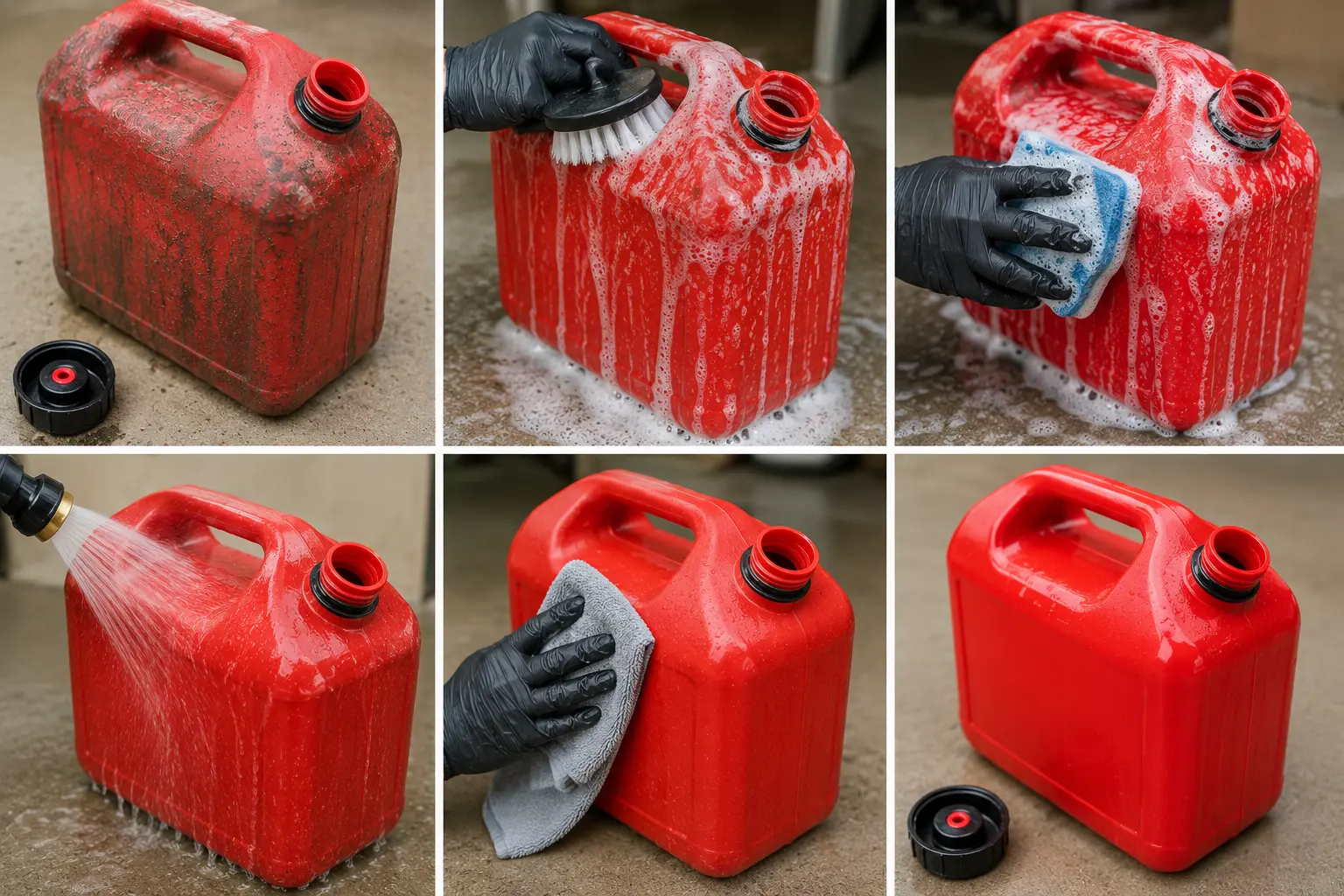
You can clean your can in the yard, too, if you’re using a hose. I used a sink, so I placed the gas can in one basin. Let the toothbrush soak in dish detergent under the faucet after squeezing a little on it.
-
Scrub the gas can from top to bottom, starting at the top. Make sure you keep wetting the brush under the faucet as you go and adding another drop of detergent as you go.
-
Scrape the bottom of the can with your hands when you get to the bottom, tilting the can back or on its side.
-
Once you’re done cleaning the can, rinse it under the faucet or with a sprayer. Sticky gas and dirt residue are best removed with warm or hot water. If any grime remains, use your toothbrush to lift it, reapply detergent, then scrub again and rinse.
Gas cans: How to Clean the Inside
To prevent contaminants from entering your vehicle, lawnmower, or generator, you may also wish to clean out the inside of an old gas can filled with expired or bad gas.
The Things You Do
-
You should remove the spout and/or cap of the can after ensuring the can is empty. Add hot water to the gas can and squeeze in a bit of detergent.
-
Shake the can vigorously to remove any deposits or dirt that have been added to the inside. If you have a hand or a cap covering the spout hole, use it to cover it.
-
To remove all the detergent and debris from the can, dump it down the drain and then rinse it with water. Keep doing this until no more detergent is left.

Dry the Can Completely
Once you’ve opened the can, place it in an area with good airflow and let it dry. The fuel must not contain any water-not even a few drops. An engine could be damaged by “phase separation” (water mixing with solvents like ethanol), which occurs when water and a solvent are mixed together.
How to Use Your Clean Gas Can
As soon as your gas can is dry, you can reattach the spout, cap, or both and either store it in your vehicle or fill it up with fuel again to use in your yard equipment.
As a result of my recent Craigslist purchase, I am planning to keep the smallest gas can (1 gallon) in the back of my car just in case I run low on gas and have to walk to the gas station.
A Guide to Filling a Gas Can
Gas stations may have automatic shut-off features that cause problems when you fill up your gas can. In some cases, this can happen when gasoline splashes too much inside the can and the sensor on the pump indicates the can is full. Slowly filling can prevent this frustration.
You should use a gasoline container specially designed for storing and transporting gasoline before filling it. You should choose cans made from high-density polyethylene (HDPE) and with a tight-sealing cap. You can safely fill your gas can by following these steps:
1. Position the Gas Can: Make sure the can is on the ground, far from flames or electric equipment that could cause an ignition. It is important to ensure that the gas can will not tip over when being filled. You should never fill a gas can from inside your vehicle or from the bed of a truck.
2. Ground Yourself: If you are about to touch a gas can or a gas pump, touch any metal part of your vehicle or another grounded object first.
3. Remove the Cap: Unscrew or remove the cap from your gas can, depending on its type. A clean, safe place away from gasoline is where the cap or spout should be kept.
4. Insert the Nozzle: Place the gas pump nozzle inside the gas can opening. Ensure that it is inserted securely to prevent leaks.
5. Fill the Gas Can: Activate the trigger on the gas pump nozzle to let gasoline flow into it. Slowly fill the gas can to avoid overfilling. Leaving some space at the top will allow the gasoline to expand. In order to prevent gasoline from flowing when the can is full, pay attention to automatic shutoff mechanisms on the gas pump.
6. Close the Gas Can: After filling the can, remove the nozzle gently. Make sure it is tightly closed by screwing on the cap or reattaching the spout.
Gas Can Storage Tips
Keeping gas cans properly stored is essential to preventing fire hazards. Keeping gasoline in flammable liquid containers is a good idea. It is recommended that these containers be made of corrosion- and leak-resistant materials, such as metal or high-density polyethylene (HDPE). Also, make sure that the container is properly labeled and kept out of reach of any potential sources of ignition.
FAQs
How Long Can Gas Be Stored?
There is no significant degradation of gasoline after storage for three to six months on average. However, gasoline can be made to last up to 1 year if stabilizers are added. Over time, gasoline becomes oxidized and deteriorates as a result of fuel stabilizers.
When exposed to air, moisture, and heat, the degradation process can be accelerated. The key to minimizing gasoline degradation is storing it in tightly sealed, approved containers in a cool, dry environment. A regular inspection of gasoline stored in a garage is also recommended. You should not use gasoline if it looks discolored, smells foul, or contains sediment as it may have degraded and can cause engine or equipment damage.
What is the best place to store gas cans?
It is important to remember that gas is highly flammable and expands when heated. Keep it cool, dry, and well-ventilated. A shed, detached garage, or other outbuilding makes a good storage location. It should be stored in a fireproof safety cabinet so they will remain safe and secure.
When gas is stored in a utility room, basement, or attached garage, the property as a whole is at risk if the fuel catches fire. An ignition source is also usually present in these areas, including furnaces and other electrical equipment.
Can Gas Cans Be Stored Outside?
If you don’t have a shed or outbuilding, you shouldn’t store filled gas cans outside. Ensure that the area is cool, dry, and shaded from direct sunlight.