

In GreenPan’s non-stick cookware, toxins are claimed not to leach into the food. Instead of Teflon, heavy metals, or other harmful “forever chemicals” (like PFOS), this non-stick surface is built from multiple layers of stainless steel with a ceramic coating.
Often, ceramic pans are snubbed because they are less nonstick than Teflon, but my GreenPan is a great choice for fried egg flips and sticking-free fish. Furthermore, it can withstand 600 degree temperatures, so it can be placed directly in the oven or broiler. Pots and pans from GreenPan should be washed by hand, but most are dishwasher safe-a rare feature for ceramic cookware.
Maintain your GreenPan’s quality by cleaning it properly.
Cleaning nonstick ceramic cookware is simple when you follow a few simple steps.
The GreenPan: What Is It?
It has been around since 2007 that GreenPans have been making ceramic nonstick cookware.
There is no doubt that GreenPans are the best ceramic nonstick pans on the market thanks to their Thermolon coating.
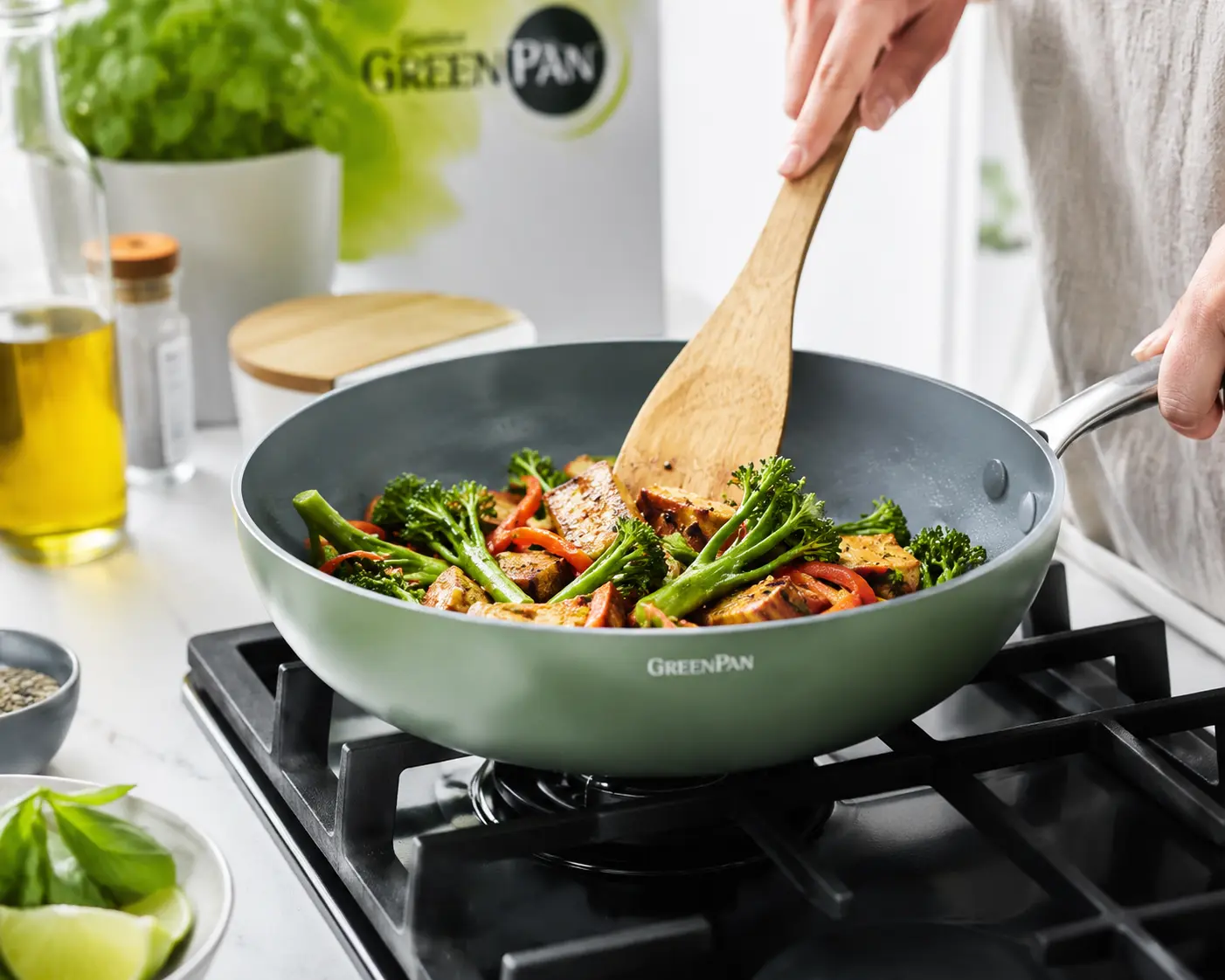
According to the company’s official website, Thermolon does not release toxic fumes if it is accidentally overheated.
According to third-party testing labs, Thermolon meets the international food contact standards set by the European Union and the FDA authorities.
Spraying the Thermolon coating onto a pan is made possible by combining raw materials derived from sand.
GreenPans are popular because they don’t contain harmful elements like lead, cadmium, or PFAS.
What Are PFAS?
Products widely used in daily life contain PFAS, which are a class of industrial chemicals that number over 4,700.
Nonstick cookware, clothing, toiletries, and food packaging all contain PFAS.
Blood, water, air, and food are contaminated with PFAS.
PFAS can lead to a variety of adverse health effects, according to the EPA’s website.
Due to their persistence in the environment, these chemicals are known as “forever chemicals”.
The degradation of some PFAS takes more than a thousand years. It is possible that generations to come will be affected by PFAS.
There has not been extensive study of all PFAS, but all that has been is toxic.
As of right now, it is virtually impossible to remove PFAS from the environment, which affects humans as well as wildlife.
Making a conscious decision to use PFAS-free products will benefit your household and the environment.
With GreenPans, you can contribute to a safer cooking experience.
Cooking with your GreenPan: Tips and Tricks
To keep your cookware in good condition, follow these 5 tips:
Step 1 : Ensure that the heat is low to medium. Thermolon is the more effective heat distribution material used by GreenPans. GreenPans are great for searing meat even at low to medium heat.
Step 2 :Utensils made from silicone and wood should be used. A silicone spoon or wooden spoon will be softer on a pan than other materials, and will help to keep the non-stick surface in good shape for a very long time.
Step 3 :Butter or oil can be used. A good way to distribute heat is to use oil or butter. Cooking at high temperatures requires oils with a high smoke point. There are many good oils to choose from, such as avocado, peanut, canola, sunflower, or sesame oil. Cooking oil should not be used in spray form, as the particles will heat up quickly and burn. Additionally, this can cause unpleasant odors, burned food, stuck food, and a burnt pan. Cooking should be stopped if your fat or oil begins to smoke. When the pan is too hot, it will smoke.
Step 4 :It is important to allow the pan to heat up. Cooking in a pan that has been heated for two minutes prior to cooking can prevent you from using high fat products like butter and oil. As a result, you will be able to cook evenly and prevent sticking.
Step 5 :If you are cooking food, avoid using a knife. It will help prevent scratches and damage to your GreenPan. Beaters powered by electricity or batteries should not be used as well.
How to Clean a GreenPan
Like other non-stick pans, these ceramic pans need to be properly maintained.
Maintaining them can be made easier with these tips. There are some GreenPans that can be put in the dishwasher.
There should be a statement on the product packaging indicating whether the pan can be washed in the dishwasher. Check out the GreenPan website as well.
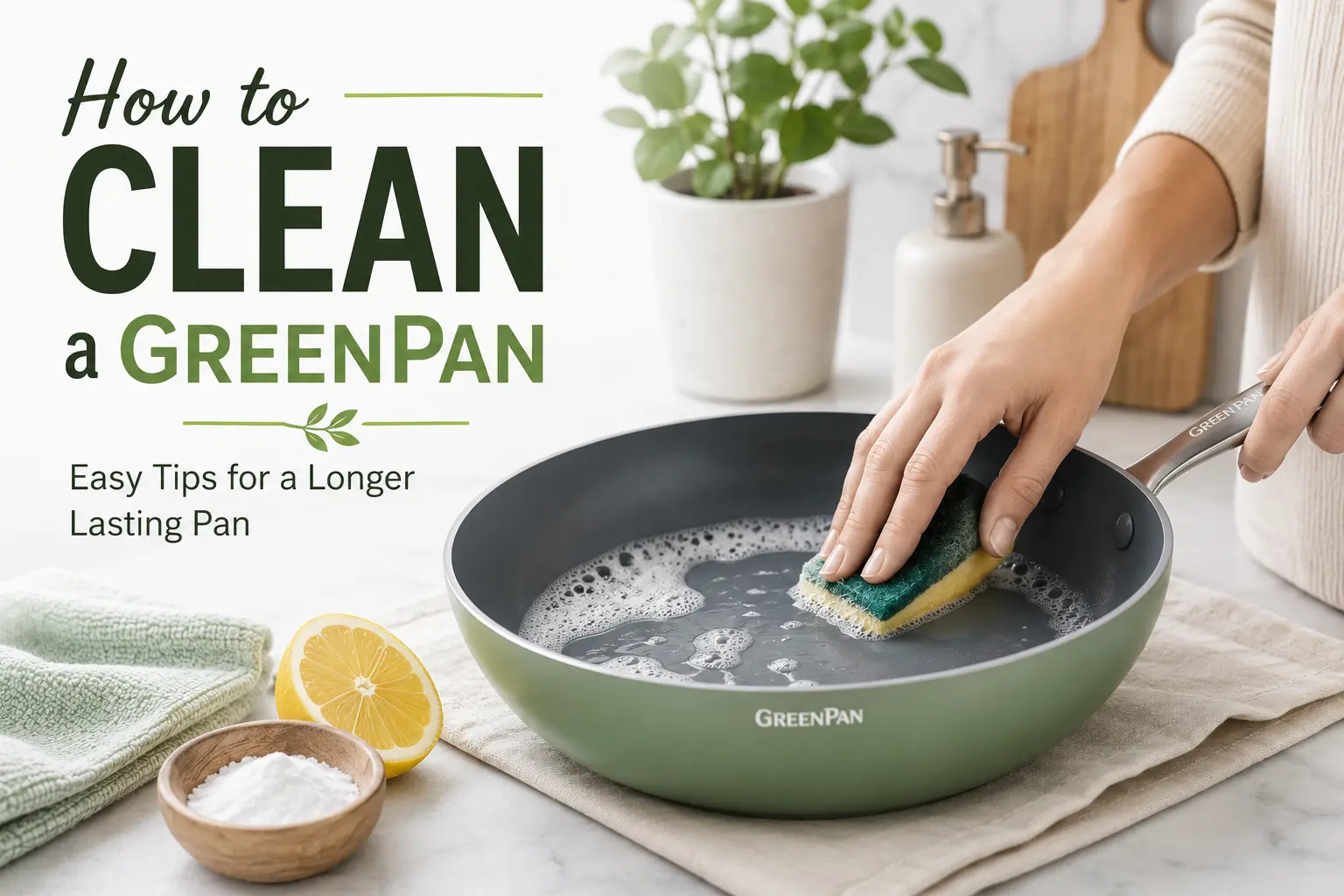
It is, however, recommended that you wash your hands whenever possible. Your cookware will last longer if you wash it by hand. Using a soft sponge and warm, soapy water, you can easily clean GreenPans.
Using steel wool or iron sponges or abrasive detergents is not recommended. When it comes to dish sponges, they work best.
In some cases, baking soda can be used to scrub your pan, but it should not be used daily because the nonstick surface will eventually be destroyed.
Cold or cooler water should not be used to plunge a hot pan. Consequently, thermal shock damages a pan or shatters its lid. You should wait until your cookware is completely cooled before washing it. There is a possibility of carbonization with GreenPans.
As a result of overheating, sticky residue forms on your pan when cooking oils. It is possible to remove this residue from your pan by deep cleaning it.
How to Deep Clean Your GreenPan
Keeping your GreenPan clean and in good working order is as easy as following these steps.
The traditional method is:
- Water should be filled halfway in the pan, and it should be brought to a boil within two minutes of being filled.
- Make sure the pan is dry before placing it on a sturdy surface like a wood cutting board.
- The warm surface should be cleaned using a restoring sponge (melamine).
- The exterior can be cleaned with a thick paste made of baking soda and water. Rub a paper towel over tough stains to remove them. The following applies only to exterior surfaces.
The vinegar method (hot)
- Pour a 50/50 mix of water and white vinegar into a saucepan.
- Using a wooden spoon, remove any stuck-on bits.
- After the food has cooled, soak the pan in hot soapy water to complete the release.
- As soon as the soaking is done, clean as usual.
The vinegar method (cold)
- Stains and stuck-on food can be removed by soaking in a solution of water and white vinegar overnight. Mix 2 cups of water with 12 cups of vinegar in a pan.
- After 12 hours, allow the mixture to soak overnight.
- With a melamine sponge, gently scrub the stain or food.
FAQs
Is GreenPan Cookware Safe?
It is important to consider GreenPan when choosing cookware if safety is a priority. There are no PFAS chemicals in GreenPan’s ceramic nonstick coating, such as PTFE, PFOA, and GenX. Furthermore, it does not contain heavy metals such as lead or cadmium.
GreenPan’s nonstick cookware is designed to perform without using chemicals that have raised health and environmental concerns. Consequently, many home cooks choose it over conventional nonstick pans due to its safety features.
Why Use Vinegar to Clean a GreenPan?
Many kitchen appliances can be cleaned with vinegar.
Using vinegar for cleaning items that easily build up a residue over time, like Keurigs, ensures that they will be descaled and decalcified.
A pan or microwave can be cleaned with vinegar, since vinegar’s acidic properties make it ideal for removing baked-on or heated food from pans.
Aside from cleaning your pans, vinegar can also combat hard water and limescale.
In addition to refrigerator spills and countertops, vinegar can be used to clean hard-to-clean, stubborn messes.
Cooking surfaces can be removed with vinegar by removing grease and oils.
You can use vinegar to clean your natural cookware, like GreenPans, because it is inexpensive.









Leave a Reply